Studies Show Better Sleep Boosts Academic Performance
08/16/2026 / By Coco Somers

Two new studies indicate that regulating sleep may be a significant factor in academic performance for students at multiple ages, according to researchers.
The first study was conducted by researchers at the University of Pittsburgh, Carnegie Mellon University and the University of California, San Diego. The second, led by Jason Smucny of the University of California, Davis, and Nicole R. Karcher of Washington University in St. Louis, drew on data from the Adolescent Brain Cognitive Development (ABCD) Study, one of the largest long-term child brain development studies in the United States [1].
The findings follow survey data showing an increase in insufficient sleep among U.S. high school students. According to a study published March 2 in the Journal of the American Medical Association, more teenagers are sleeping five or fewer hours per night. Researchers deemed anything less than eight hours of sleep per night insufficient for this age group [2].
College Students Averaged 6.6 Hours of Sleep Per Night, Study Found
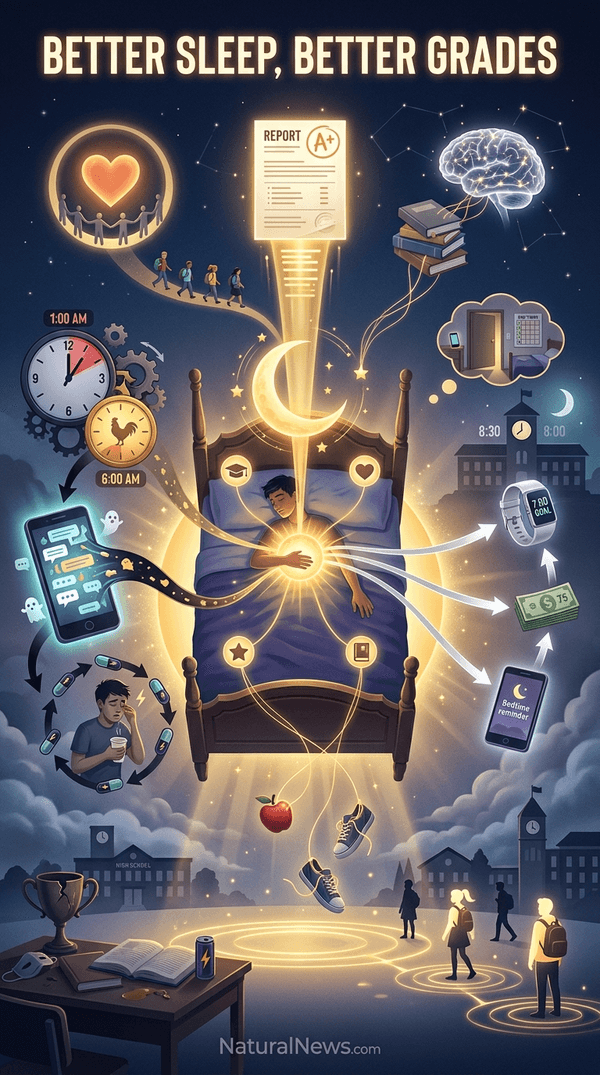
According to the first study, students slept 6.6 hours per night on average. Only 43% hit seven hours on weeknights, and about half regularly went to bed after 1:00 a.m.
To test whether better sleep could affect grades, researchers gave students Fitbit trackers, a custom app with bedtime reminders and cash rewards of about $4.75 per night for hitting a seven-hour goal. Students in the incentive group slept about 19 more minutes per weeknight and earned higher grades that semester, the report stated.
Researchers said the grade improvement rivaled traditional financial-aid incentive programs at less than a quarter of the cost. The gains were not uniform across the student body, the report stated. Freshmen benefited most, while STEM students and those with midday classes also showed strong effects.
“Our results show that helping students sleep more, and sleep better, can boost academic performance just as effectively as traditional academic interventions, but at a fraction of the cost,” said Osea Giuntella, Ph.D., an associate professor of economics at the University of Pittsburgh and lead researcher of the study.
Adolescent Data Shows Sleep Links Mental Health to School Outcomes
The second study examined four lifestyle behaviors: sleep, screen time, physical activity and diet. Data came from the ABCD Study, the authors stated. Researchers found that sleep quality was a key mechanism linking mental health to academic performance and social functioning, not merely a symptom of how a teenager was doing mentally [1].
Research cited in “Sleep Disorders Medicine” found that sleep needs do not markedly decline after puberty, despite increased metabolic expenditures associated with growth during adolescence. A study of 3,120 American high school students reported a reduction in total sleep time of 40 to 50 minutes on school nights [3].
A separate account in David L. Gleason’s book “At what cost defending adolescent development in fiercely competitive schools” described a high-performance secondary school that delayed its start time from 8:00 a.m. to 8:30 a.m. for two months. The mean school night sleep duration increased during the study, according to the account [4].
Barriers Cited: Late Nights and Screen Use; Researchers Offer Steps
According to the report, late nights are often worn as a badge of honor, especially in college, and all-nighters are perceived as productive. The college study found that the sleep intervention reduced late-night screen use, suggesting that phone and video habits compete with sleep time.
The same dynamic appears among adolescents, according to researchers. Survey data show a broad increase in insufficient sleep among U.S. high school students [2].
Some students have also sought “smart drugs” to improve concentration. A Swiss study published in 2013, cited in a 2016 report, found that one in seven college students abused such substances [5].
Researchers recommended several steps for students: Set a consistent bedtime, shift study hours earlier, place phones in another room after a set hour and treat seven hours as a minimum threshold. For parents, the report advised discussing bedtimes explicitly, setting boundaries on devices in bedrooms and evaluating sleep alongside other factors if a child is struggling.
Sleep Described as Low-Cost Academic Intervention
Researchers described sleep as an intervention that does not require a purchase, a program or a tutor and does not add to an already packed schedule. The report concluded that sleep quality shapes academic performance, stress resilience and social functioning, making sleep a non-negotiable part of an academic routine [1]. In “The Sleep Revolution,” Arianna Huffington cited a Centers for Disease Control and Prevention report on unhealthy sleep-related behaviors and a National Sleep Foundation poll on sleep in America, underscoring the broad consequences of sleep loss [6].
References
- NaturalNews.com. “Study: Sleep Quality Tied to Academic, Social Outcomes in Adolescents With Mental Health Symptoms”. NaturalNews.com. August 11, 2026.
- NaturalNews.com. “American Teenagers Are Sleeping Less: Study”. NaturalNews.com. March 8, 2026.
- Sudhansu Chokroverty. “Sleep Disorders Medicine”.
- David L. Gleason. “At what cost defending adolescent development in fiercely competitive schools”.
- NaturalNews.com. “Nootropics pop up on campuses but do smart drugs actually work”. NaturalNews.com. April 14, 2016.
- Arianna Huffington. “The Sleep Revolution”.
Explainer Infographic
Submit a correction >>
Tagged Under:
academic performance, adolescents, Censored Science, children's health, education, education system, health science, learning, men's health, natural health, research, sleep, sleep disorders, sleep hygiene, sleep quality, sufficient sleep, women's health
This article may contain statements that reflect the opinion of the author
RECENT NEWS & ARTICLES